
E-Kappa Assessment System
Appearance Inspector Kappa Analysis
Move QC appearance training, training exams, and Kappa certification online: reusable digital samples, automatic Kappa / overkill / miss-rate scoring, and paperless, traceable inspector capability management.
Product Overview
E-Kappa is an integrated platform for manufacturing QC appearance inspectors—paperless online training, training exams, and Kappa job-certification. The system replaces physical parts with digital samples (including 2D and 3D); multiple examinees can test concurrently; MSA-aligned consistency metrics are calculated automatically. Typical use cases include batteries, 3C, and automotive components that rely on visual judgment.
E-Kappa can be deployed on the customer’s internal LAN so sensitive assessment and sample data never leave the plant. Image data or 3D models may be provided by the customer, or Jingduo can deliver data production services for library build-out and modeling.
Whether for new-hire certification or periodic re-qualification, E-Kappa connects “learn standards → prove skill → certify consistency” into a manageable, reviewable loop.

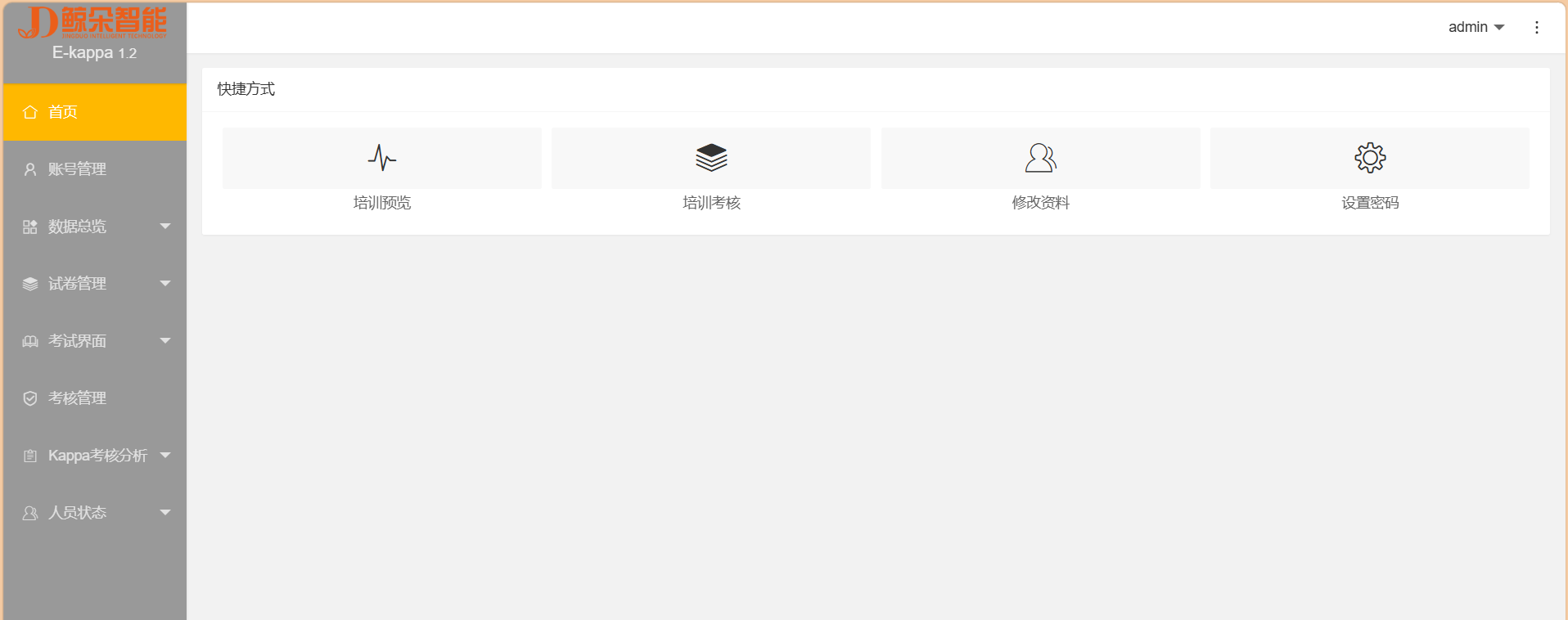

What Is Kappa: Appearance Inspector Consistency Analysis
In quality systems, MSA (Measurement System Analysis) evaluates whether a measurement or judgment system is trustworthy. For appearance inspection—attribute judgment by human eyes—one common method is Kappa analysis: measuring agreement among multiple inspectors on the same sample set.
Appearance inspector consistency (Kappa) analysis focuses on people, not gauges: Do different QC inspectors share the same defect boundary? Is the same person stable over time? Do results align with the gold standard / authoritative judgment?
Kappa value
Core agreement metric between inspectors, or between inspectors and the standard. Higher values mean more consistent execution of appearance criteria.
Overkill rate
Share of good parts wrongly judged NG. High overkill drives rework/scrap cost and distorts yield.
Miss rate
Share of defective parts wrongly accepted. Misses threaten shipment quality and customer trust—the critical risk line for visual QC.
Why Kappa Assessment Matters for Appearance Inspectors
Appearance inspection depends heavily on experience and interpretation of standards. Even with detailed SIPs, inconsistent grasp of defect grades and border samples creates “strict vs loose” drift on the same line.
Individual differences in standards
Cracks, dirt, scratches, solder joints, and similar items often sit in gray zones. Without unified training and exams, overkill and misses rise.
Objective evidence for onboarding & refreshers
Customer audits and internal QMS typically require certified inspectors and periodic re-evaluation—Kappa is the industry’s quantitative approach.
Classroom alone does not close the loop
If training is not linked to exams and analytics, managers cannot find weak defect types or target personal remediation.
Quality cost and complaint risk
Overkill inflates manufacturing cost; misses drive complaints and recalls. Quantifying inspector capability with Kappa addresses both.
Traditional Physical Assessment vs E-Kappa
Traditional Kappa often relies on physical OK/NG samples, paper answer sheets, and post-processing in Minitab/JMP. Physical samples age, break, and get lost; organizing an event needs rooms, sample logistics, and one-by-one testing—slow and hard to audit.
| Dimension | Traditional physical assessment | E-Kappa digital assessment |
|---|---|---|
| Sample management | Parts age, break, contaminate; rare NG samples hard to replenish; poor long-term archive | Digital (2D / 3D) samples built once, reused long-term, version-controlled standards |
| Organization | Room setup and physical flow; mostly sequential, time-consuming | Browser-based, concurrent multi-user exams, no meeting-room bottleneck |
| Papers & anti-cheating | Fixed paper order; manual shuffle of samples, error-prone | Smart random papers; two-round order auto-adjusted with traceable IDs |
| Scoring | Manual entry into stats tools—slow and error-prone | Instant results: Kappa, overkill, miss rate, and agreement auto-calculated |
| Training linkage | Training and exams disconnected; paper records hard to search | Train → training exam → Kappa gated loop, fully paperless and traceable |
| Review & management | Wrong answers and history hard to retain; weak cross comparison | Instant wrong-answer review; personnel status, pass rates, and hard defects in multi-dimensional analytics |
Training–Exam–Certification Loop
E-Kappa uses gates to protect certification quality: candidates who have not completed training preview or failed the training exam cannot enter Kappa certification.
Training preview
Browse the full training gallery
with standards / defect codes / grades
Training exam
Random papers to reduce cheating
Typical pass line ≥ 90; multi-round retakes
Kappa exam
Two-round agreement judgment
Auto Kappa / overkill / miss metrics
Product Features
Core capabilities across samples, training, exams, administration, and analytics.
2D / 3D digital sample library
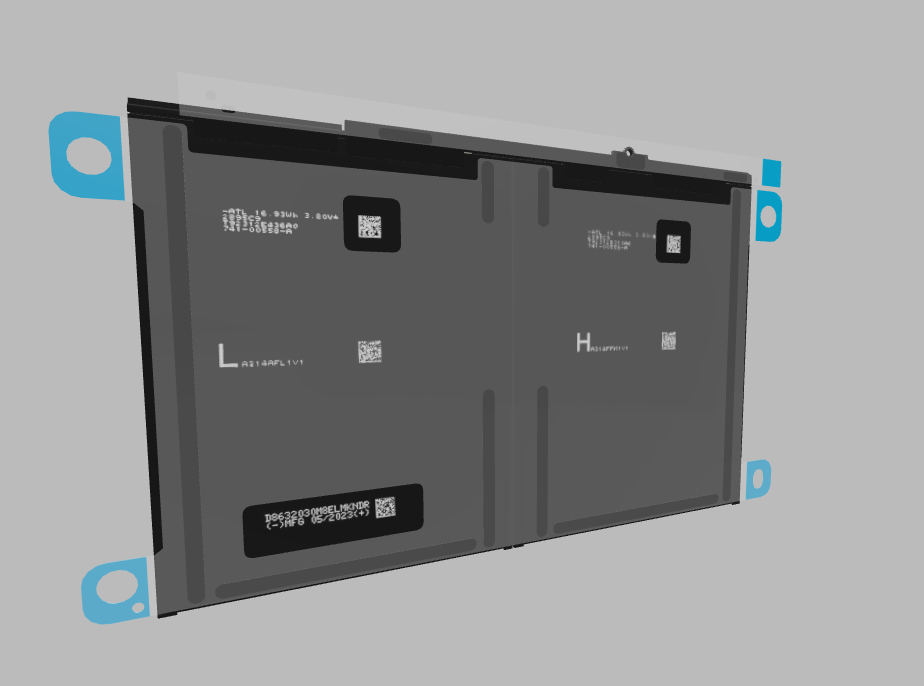
Digital samples (including 2D and 3D) replace physical parts: 2D galleries or modeled textures recreate appearance with zoom, rotate, and locate. Samples persist—no need to stage dozens of OK/NG physical parts before every event.
- 3D views closer to real inspection; 2D libraries for faster build-out
- Standardized samples reduce drift from physical aging
- Customer-provided images/3D models, or Jingduo data production services
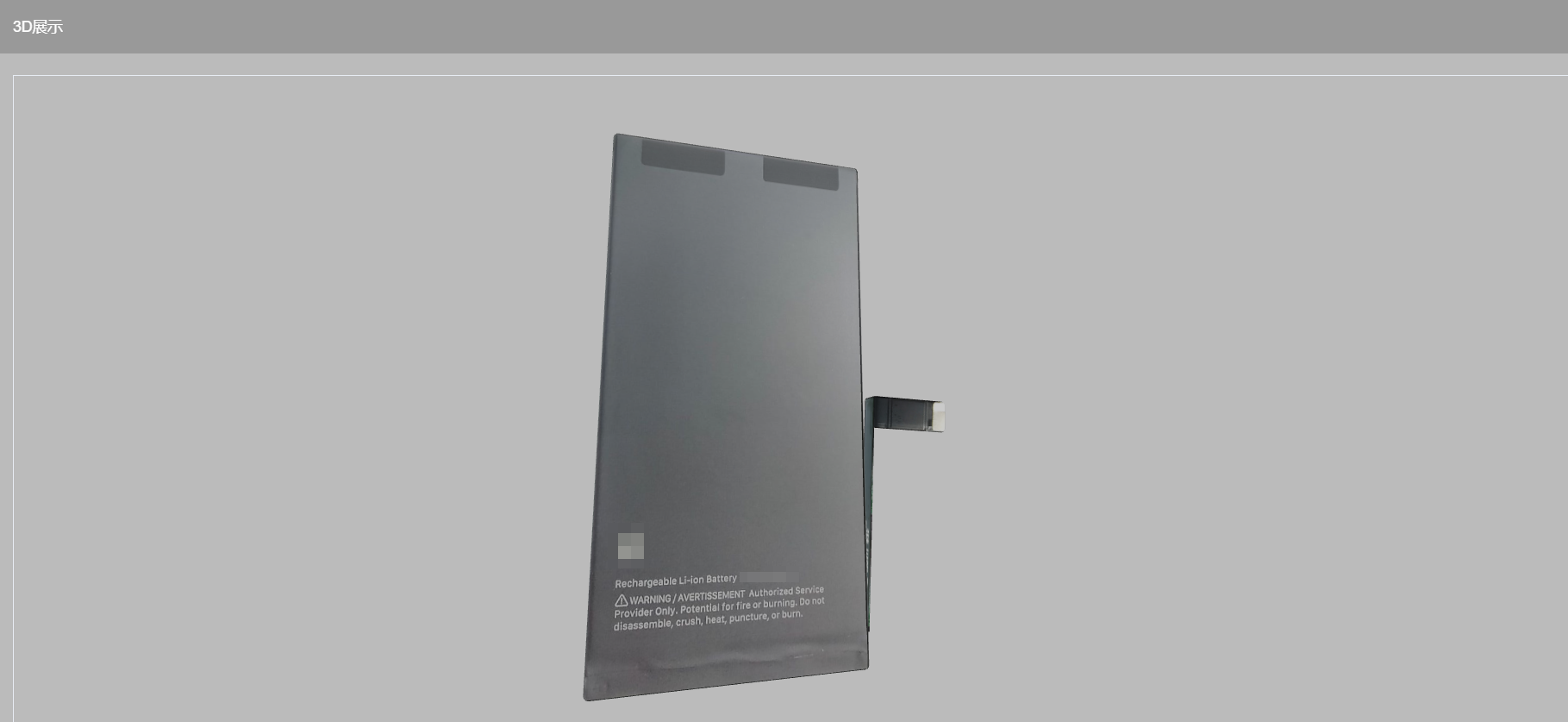
Online training preview & training exams
Learn anytime without a classroom: NG images show inspection criteria, defect codes, and grades. Random training exams with instant wrong-answer review until pass.
- Gate: finish training preview before exams
- Randomized items reduce sequence memorization
- Feedback closes standard blind spots quickly
Kappa assessment & smart paper generation
Random papers by OK/NG ratio and defect-grade mix; two-round judgment; automatic Kappa, overkill, and miss rates—no manual import into stats software.
- Concurrent exams replace “one sample set, one person at a time”
- Paper catalog and project management by product line
- Immediate scores shorten certification cycle time
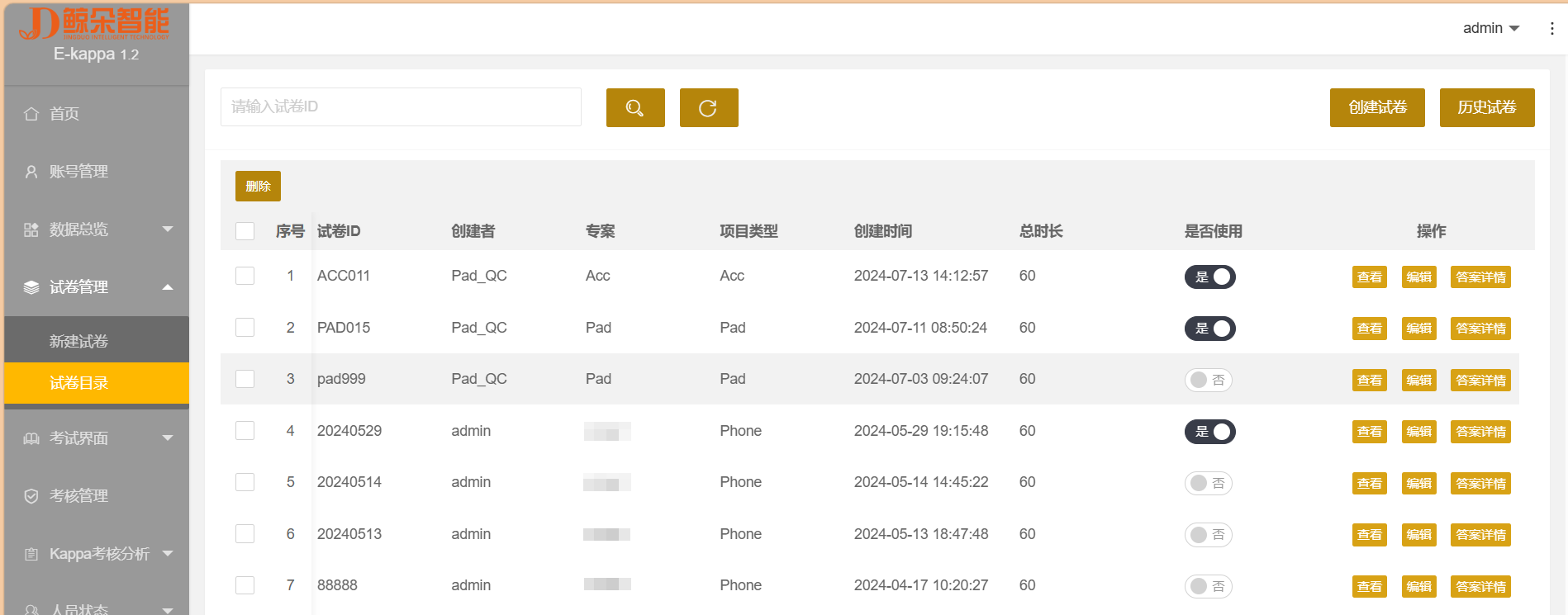
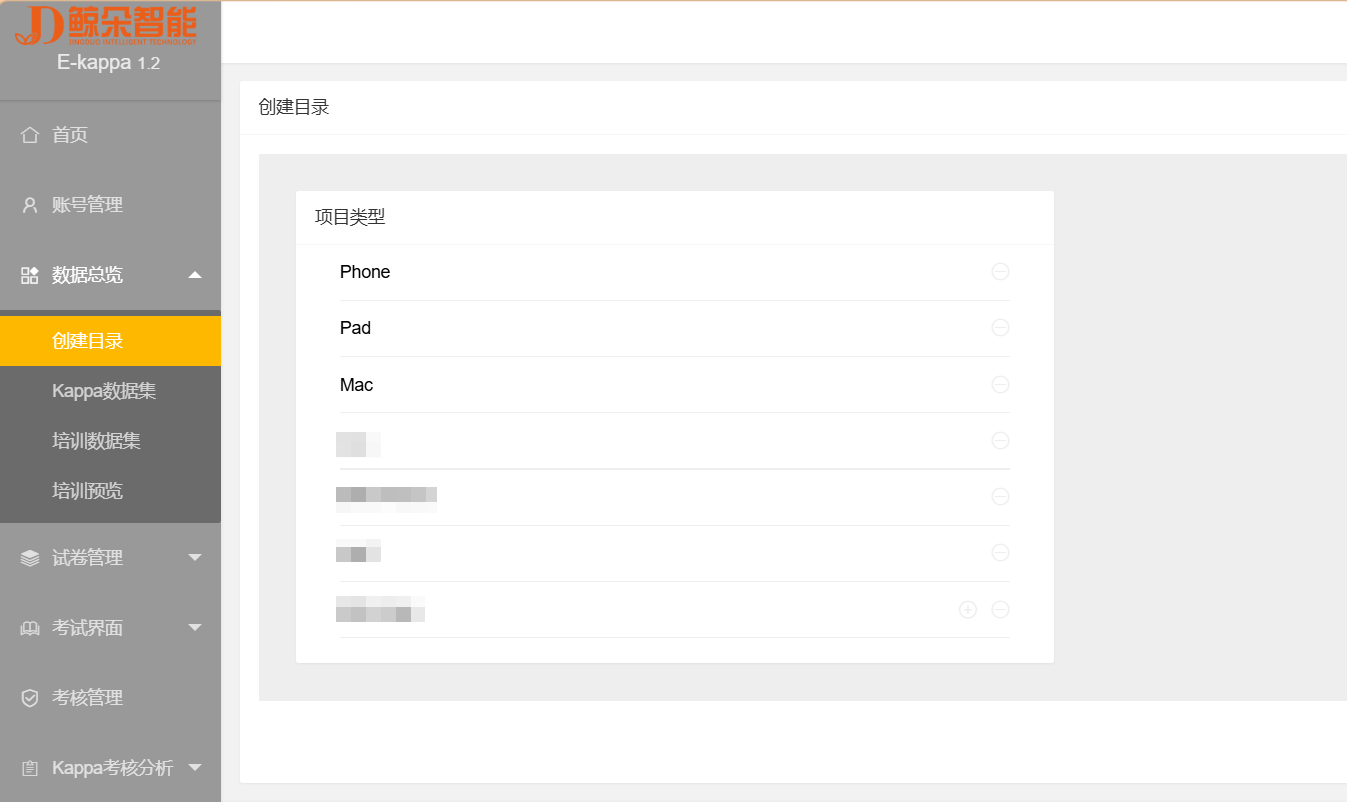
Dataset & project management
Organize item banks and sample assets by project/dataset with batch maintenance—ready for parallel lines and models.
- Centralized datasets with clear permissions
- Create projects to launch new certification waves
- Item-bank scale expands with enterprise needs
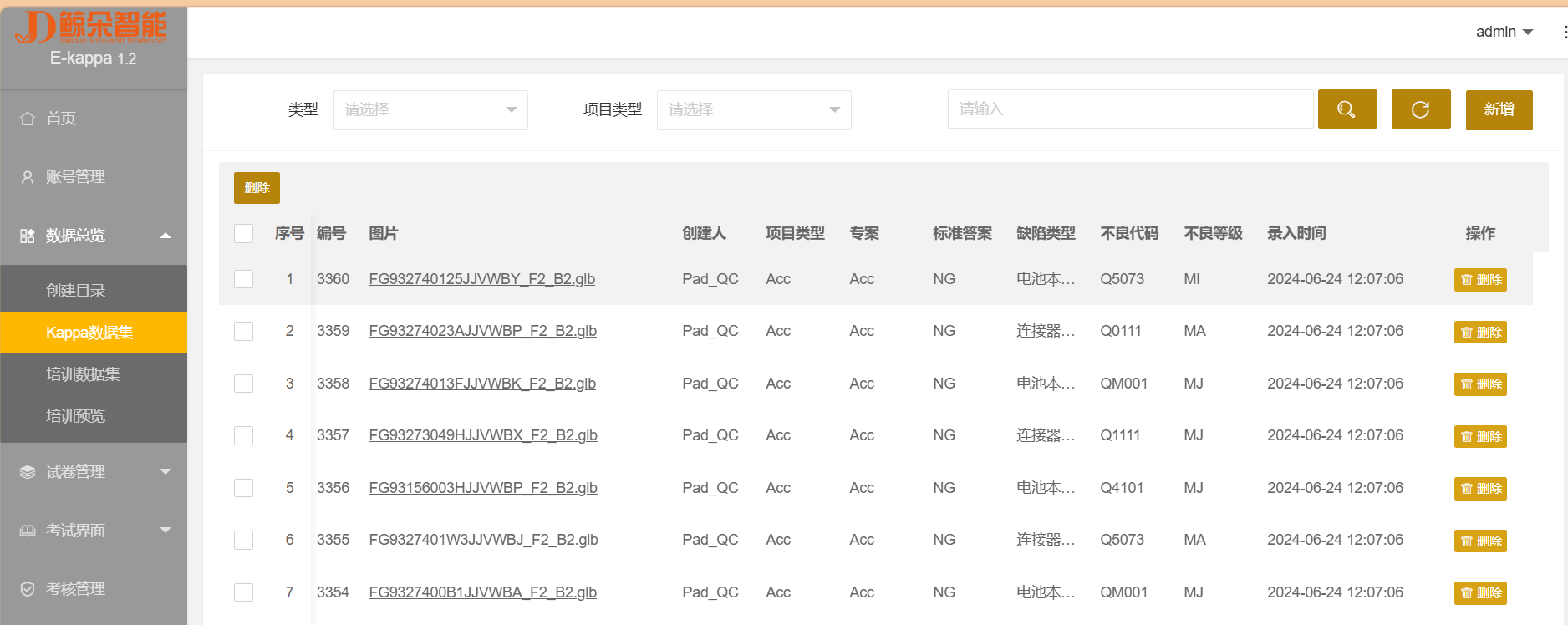
Proctoring, retakes & personnel status
Admins see training, training-exam, and Kappa status in one place; force-exit or clear-and-retake keeps sessions orderly and remediable.
- Capability status at a glance
- Proctor actions take effect immediately
- Role separation: admin vs employee
Score analytics & LAN deployment
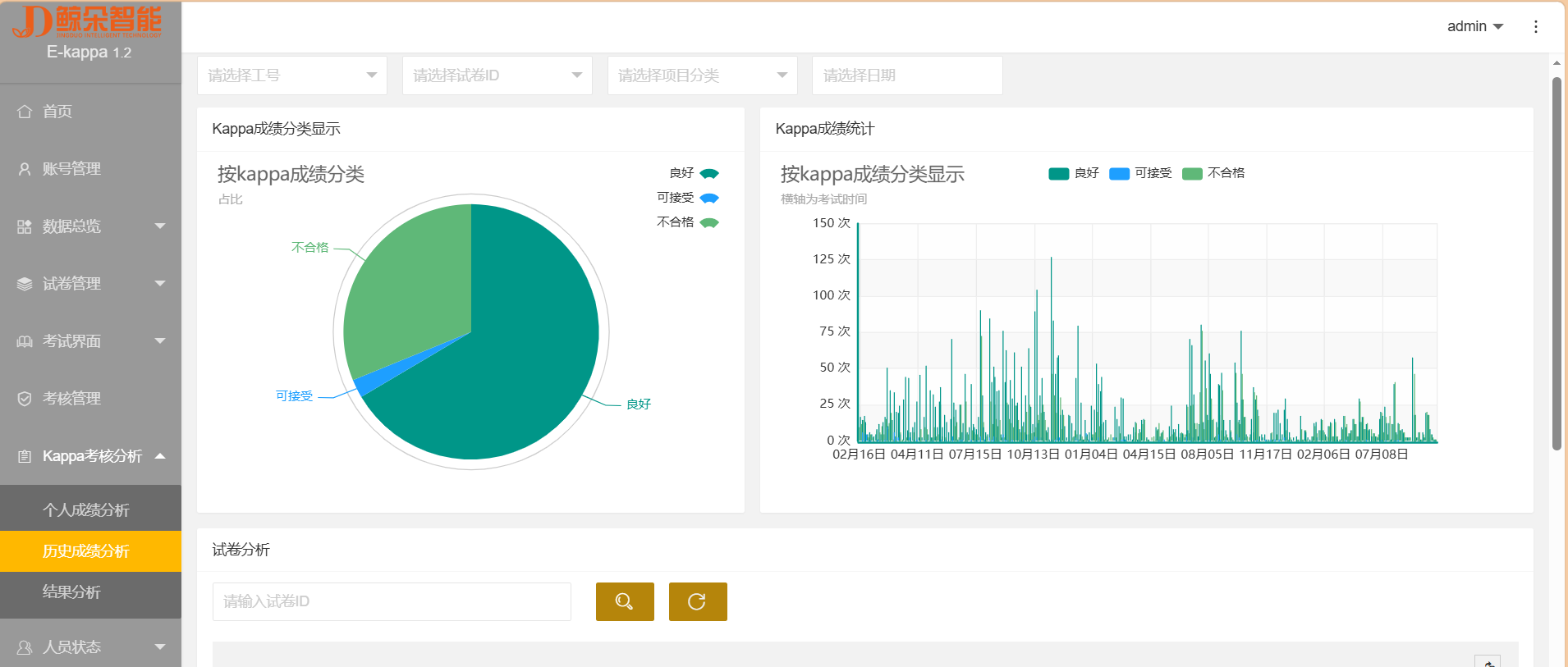
Personal trends, population distributions, paper pass rates, and hard-defect analytics. B/S architecture supports deployment on the customer’s internal LAN, keeping sensitive data inside the plant.
- Instant scoring with one-click wrong-answer review
- Reports for QE / training admins
- Plant LAN deployment with network isolation—data does not leave the site

Product Demo
Typical Scenarios
New energy / battery appearance QC
Training and Kappa certification for cell body, label, FPC, solder, connector, and related visual defects.
3C & precision structures
Consumer-electronics and assembly appearance posts that need unified judgment standards.
Automotive & other manufacturing
Any visual attribute judgment role that needs MSA Kappa and inspector capability management.
Audits & internal systems
Traceable electronic records for onboarding credentials, periodic refreshers, and audit evidence.